

What to pack for your trip to Europe? A complete travel guide
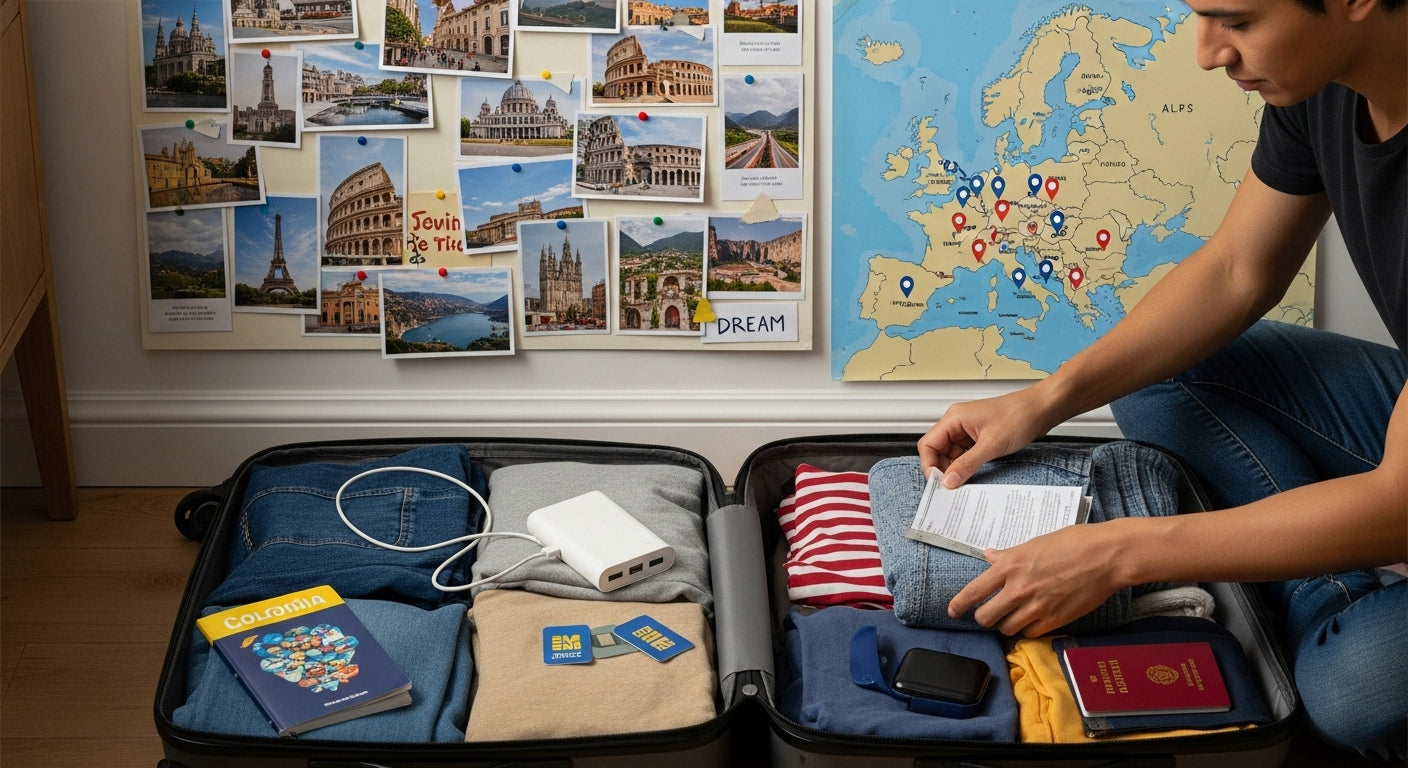
Introduction: The Magic of Europe Awaits
Are you ready for your first European adventure? From the sun-drenched shores of the Mediterranean to the snow-capped mountains, Europe has it all. But before you set sail, do you know what to pack to make the most of your experience? This article is the perfect guide for Colombians preparing for their first trip to Europe, so their only concern can be enjoying themselves!
Climate in Europe and What to Pack: From the Beach to the Mountains
European weather varies considerably, and the secret to successful packing lies in understanding the differences. Europe doesn't have a single climate; rather, it features a mosaic of climate zones. These are the main types of climate you'll encounter on your trip:
- Oceanic climate: Predominant on the Atlantic coast (France, United Kingdom, Germany), with cool winters and mild summers. If you travel to these regions, be sure to pack light clothing, but also something warm for the cool evenings.
- Mediterranean climate: Spain, Italy, and Greece will greet you with hot, dry summers. Pack breathable summer clothes, such as linen or cotton T-shirts, and a light sweater for the evenings.
- Continental climate: In the east and inland, temperatures are extreme: very cold winters and hot summers. Bring warm clothing and a good pair of boots.
- Cold Climate: Scandinavia and the mountains (Alps, Pyrenees) offer a polar climate. If you plan to visit these places, thermal clothing, waterproof boots, and thick jackets are essential.
The Perfect Strategy: Layering
To adapt to temperature fluctuations throughout the day, the key is to dress in layers. This allows you to add or remove clothing as the weather changes. Here are the three essential layers:
- Base Layer: Close-fitting clothing that helps regulate moisture. In cold temperatures, choose thermal underwear or merino wool, while in warm climates, a cotton t-shirt will suffice.
- Mid-layer: A layer that insulates against heat, such as a wool sweater or fleece.
- Outer Layer: A waterproof and windproof jacket will be your barrier against rain and wind.
Footwear Suitable for Europe: Comfort Above All
Europe is a continent for walking. Whether you're exploring the cobblestone streets of Paris or hiking in the Alps, your footwear is key. Here are some recommendations:
- For Urban Tourism: Comfortable shoes with good cushioning, such as those from Skechers or New Balance, are essential for long walks.
- For Hiking: If you plan on going on hikes, invest in waterproof trekking boots with high-grip soles.
- For Night Out: Comfortable leather ankle boots or loafers are perfect for elegant dinners without sacrificing comfort.
Accessories and Essential Items: Prepared for Everything
Make sure to bring these accessories to make your trip more comfortable and safe:
- Sunscreen and insect repellent: Especially if you are going to regions with sunny or rural climates.
- First aid kit: Carry the basics for minor injuries.
- SIM card or eSIM: Stay connected with loved ones and use helpful apps for your trip. Providers like Holafly offer plans ideal for Colombian travelers.
Did you know that data usage varies depending on the apps you use? To learn more about managing your data usage in Europe, I recommend checking out this article about the data consumption of the apps you use most often.
Documentation and Security: Everything in Order!
To travel to Europe, Colombians need a valid passport and must meet entry requirements. Many European countries allow Colombians to enter without a visa for short stays (up to 90 days) within the Schengen Area. However, it is important to:
- Check the requirements for each country (some, like the United Kingdom, are not part of the Schengen agreement).
- Bring a copy of important documents: Passport, travel insurance, hotel reservations, and sufficient funds.
Additional tip: If your flight is flexible, I recommend reading how to change your international itinerary step by step so you're prepared in case you need to adjust your travel plans.

Budgeting and Money: Manage Your Finances Well
When managing your money in Europe, it's crucial to avoid high fees. Here are some tips:
- Carry some cash: Although cards are accepted almost everywhere, having some cash on hand for small expenses is essential.
- Debit and credit cards: Use a multi-currency account with platforms like Wise or Revolut to get better exchange rates.
- Fees: Always pay in euros, as some stores will offer you the option to pay in Colombian pesos, but the exchange rate is usually unfavorable.
Connectivity and Technology: Connection is Key
Staying connected in Europe is essential for browsing, booking, and keeping in touch with family. eSIMs are a convenient option for travelers, allowing you to have mobile data without a physical SIM card. Providers like Holafly and Ubigi offer plans ideal for use across Europe.
Additionally, it's important to keep in mind that data usage can vary depending on the apps you use during your trip. To learn more about how popular apps use data, I invite you to read this article about the data consumption of the apps you use most often in your daily life .
Safety Tips and Cultural Etiquette: Be a Smart Traveler
Europe is generally safe, but it's important to take precautions:
- Anti-theft backpacks: Use backpacks with hidden zippers or theft protection.
- Cultural etiquette: Make sure you know local customs, such as how to behave in restaurants, public transport, and the importance of being punctual in countries like Germany.
Conclusion: Enjoy the trip!
Now that you know what to pack for your trip to Europe, it's time to enjoy every corner of the continent. Remember that preparation is key, but so is an open attitude to embrace new cultures, flavors, and experiences. If your itinerary changes for any reason, make sure you know how to handle flexible flights. Your European adventure is ready to begin!


